

[Dec 14, 2021] 300-510 Dumps Full Questions - Exam Study Guide
CCNP Service Provider Free Certification Exam Material from BraindumpQuiz with 104 Questions
What is the duration, language, and format of Implementing Cisco Service Provider Advanced Routing Solutions (300-510 SPRI) Exam
- Format: Multiple choice
- Duration of Exam: 90 minutes
- Validity: 3 years
- Language of Exam: English
NEW QUESTION 34
Refer to the exhibit.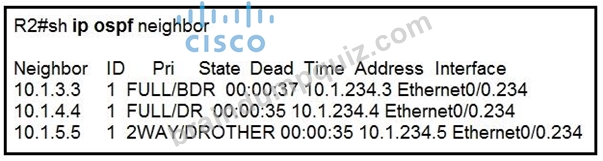
Why is neighbor 10.1.5.5 stuck in "2WAY" state?
- A. OSPF parameters (Area ID or hello interval) are mismatched between R2 and 10.1.5.5
- B. Router ID 10.1.5.5 is not reachable from R2
- C. It is an expected behavior when OSPF network type is broadcast
- D. OSPF authentication has failed between R2 and 10.1.5.5
Answer: C
NEW QUESTION 35
Which statement about enabling segment routing for IGPs is true?
- A. Segment routing can be enabled only globally
- B. Segment routing can be enabled only under the routing process
- C. Segment routing must first be enabled under then routing process and then globally
- D. Segment routing must first be enabled globally and then under the routing process
Answer: D
NEW QUESTION 36
A network consultant is troubleshooting IS-IS instances to identify why a routing domains is having communication problems between the two instances. Which description of the possible cause of issues in the routing domain is true?
- A. The interface mode ip router is-is command was not included in the script
- B. The IS-IS "ISP" and "ISP2" instances are unrelated and unable to intercommunicate
- C. The configured IS-IS NSEL value is not allowing the routing systems to establish a neighborship
- D. The same interface cannot be advertised in two different IS-IS instances
Answer: D
Explanation:
Reference:
https://www.cisco.com/c/en/us/td/docs/ios-xml/ios/iproute_isis/configuration/xe-3s/irs-xe-3s-book/ irs-instance-vrf.html
NEW QUESTION 37
Refer to the exhibit.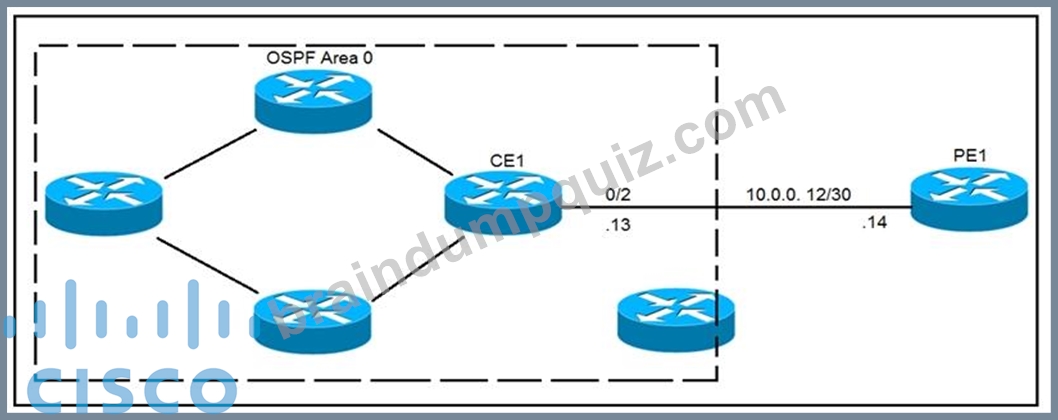
CE1 is the gateway router into the provider network via PE1. A network operator must inject a default route into OSPF area 0. All devices inside area 0 must be able to reach PE1. Which configuration achieves this goal?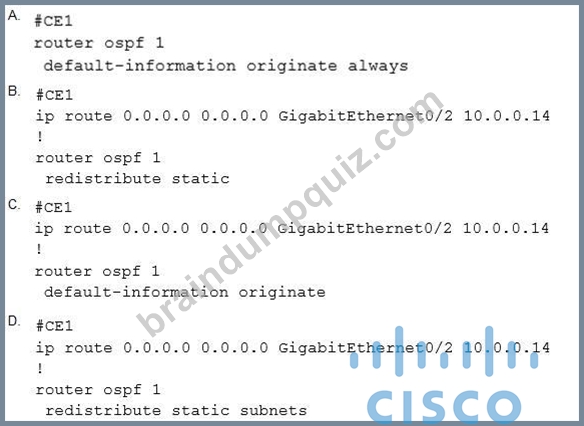
- A. Option A
- B. Option B
- C. Option C
- D. Option D
Answer: C
NEW QUESTION 38
Refer to the exhibit.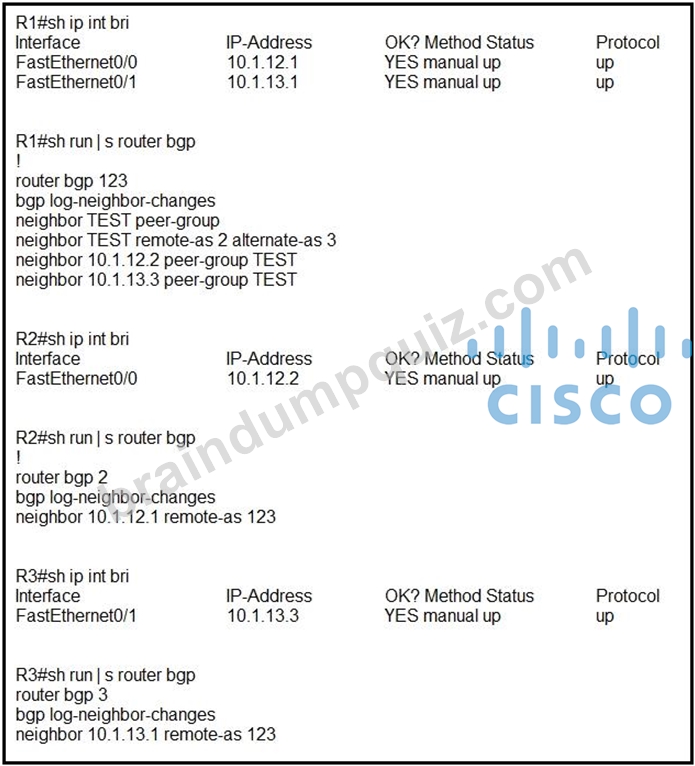
R1 is directly connected to R2 and R3. R1 is in BGP AS 123, R2 is in BGP AS 2, and R3 is in BGP AS 3. Assume that there is no connectivity issue between R1, R2 and R1, R3. Which result between BGP peers R1, R2 and R1, R3 is true?
- A. The BGP session comes up between R1 and R2, but not between R1 and R3.
- B. The BGP session comes up between R1 and R3, but not between R1 and R2.
- C. The BGP session does not come up between R1 and R2 and between R1 and R3.
- D. The BGP session comes up between R1 and R2 and between R1 and R3.
Answer: D
NEW QUESTION 39
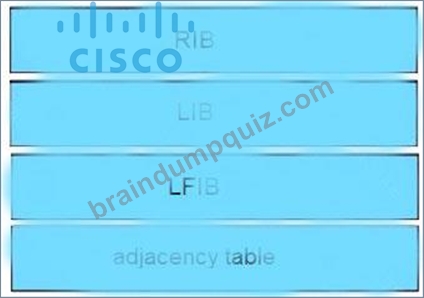
An engineer is troubleshooting end-to-end customer traffic across an MPLS VPN service provider network.
Which tasks should the engineer use to solve the routing issues? Drag and drop the table types from the left onto the most useful troubleshooting tasks/router types on the right. (Not all options are used.)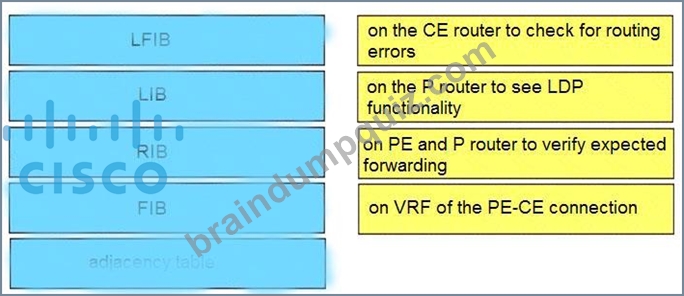
Answer:
Explanation: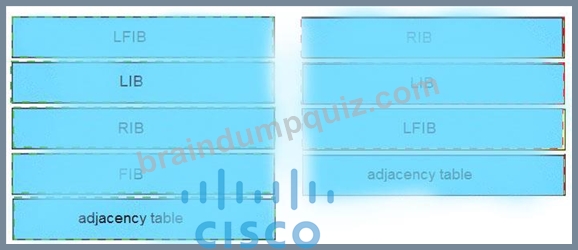
NEW QUESTION 40 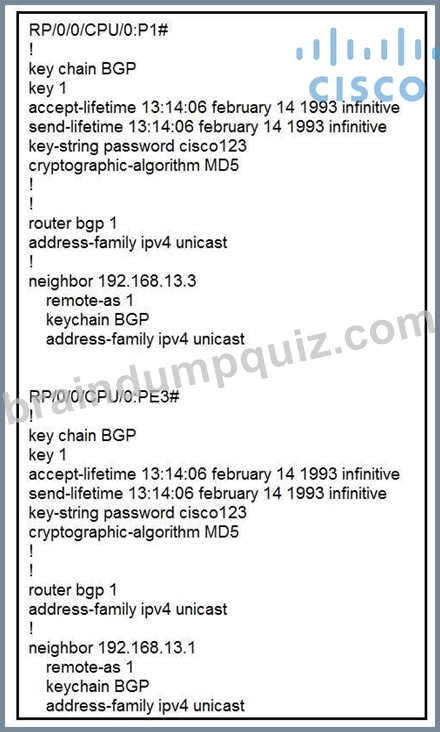
Refer to the exhibit. P1 and PE3 Cisco IOS XR routers are directly connected and have this configuration applied. The BGP session is not coming up. Assume that there is no IP reachability problem and both routers can open tcp port 179 to each other. Which two actions fix the issue? (Choose two.)
- A. Change MD5 to HMAC-MD5
- B. Change MD5 to HMAC-ESP
- C. Remove the send and accept lifetime under key 1
- D. Change MD5 to SHA-1
- E. Change MD5 to HMAC-SHA1-12
Answer: A,E
Explanation:
Explanation/Reference: https://www.cisco.com/c/en/us/td/docs/routers/crs/software/crs_r4-0/security/configuration/guide/ sc40crsbook_chapter5.html
NEW QUESTION 41
Refer to the exhibit.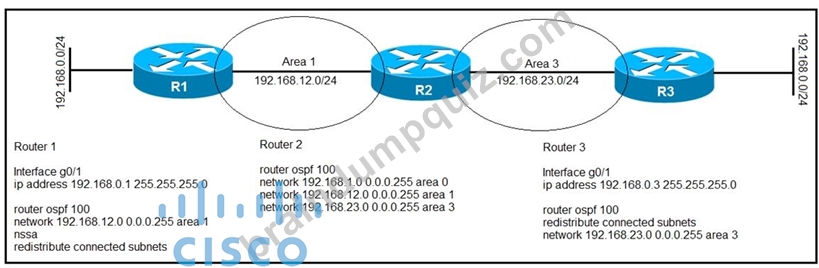
After troubleshooting an OSPF adjacency issue, routers 1, 2, and 3 have formed OSPF neighbor relationships. Which statement about the configuration is true?
- A. Router 2 uses router 3 as the next hop for 192.168.0.0/24
- B. Router 2 uses router 1 as the next hop for 192.168.0.0/24
- C. Router 2 receives a Type 5 LSAs from router 1 for its connected subnets
- D. Router 2 receives a Type 7 LSAs from router 3 for its connected subnets
Answer: C
NEW QUESTION 42
In a PIM-SM environment, which mechanism determines the traffic that a receiver receives?
- A. The receiver explicitly requests traffic from each desired source, which responds by sending all traffic.
- B. The RP on the shared tree floods traffic out of all PIM configured interfaces.
- C. The receiver explicitly requests its desired traffic from the RP on the shared tree.
- D. The receiver explicitly requests traffic from a single source, which responds by forwarding all traffic.
Answer: A
NEW QUESTION 43
Refer to the exhibit.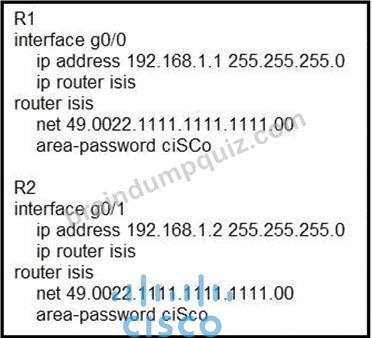
After you applied these configurations to routers R1 and R2, the two devices could not form a neighbor relationship. Which reason for the problem is the most likely?
- A. The two routers have different IS-types.
- B. The two routers have the same area ID.
- C. The two routers have the same network ID.
- D. The two routers cannot authenticate with one another.
Answer: D
NEW QUESTION 44
Refer to the exhibit.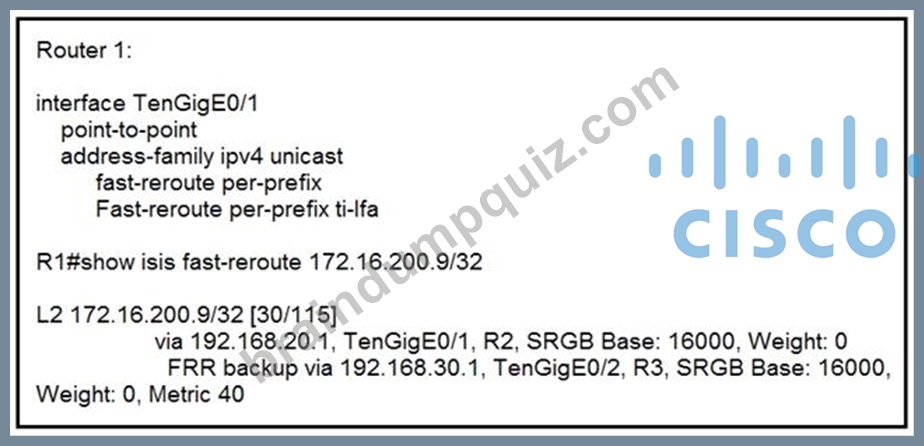
Router 1 is connected to router 2 on interface TenGigE0/1. Which interface provides the alternate path to 172.16.200.9/32 when the link between router 1 and router 2 goes down?
- A. TenGigE0/2 interface provides the alternate path
- B. A primary path must be manually installed
- C. TenGigE0/1 interface provides the alternate path
- D. A backup path must be statically installed
Answer: A
NEW QUESTION 45
Refer to the exhibit.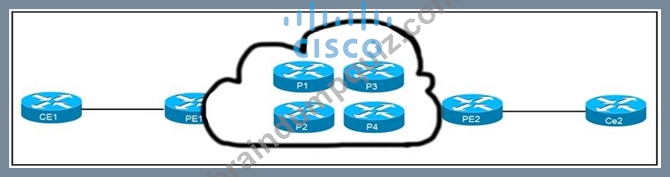
CE1 and CE2 cannot communicate through the service provider BGP peering is established between PE1 and PE2. IS-IS is the only routing protocol running in the service provider core. What step can be done to troubleshoot the issue?
- A. Confirm that IS-IS is running with metric-style narrow.
- B. Switch the IGPs running in the core from IS-IS to OSPF to support a Cisco MPLS TE tunnel from PE1 to PE2.
- C. Configure BGP between CE and PE routers.
- D. Verify the MPLS LSPs.
Answer: A
NEW QUESTION 46
Refer to the exhibit.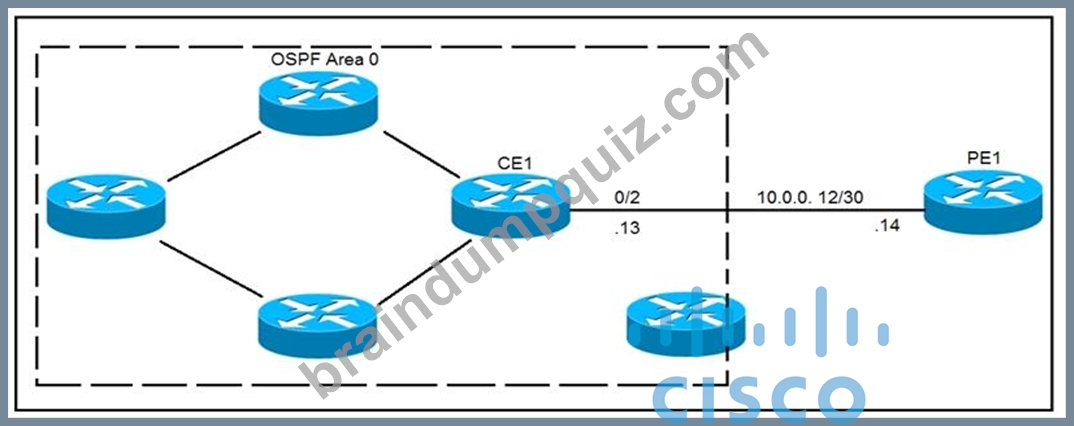
CE1 is the gateway router into the provider network via PE1. A network operator must inject a default route into OSPF area 0. All devices inside area 0 must be able to reach PE1. Which configuration achieves this goal?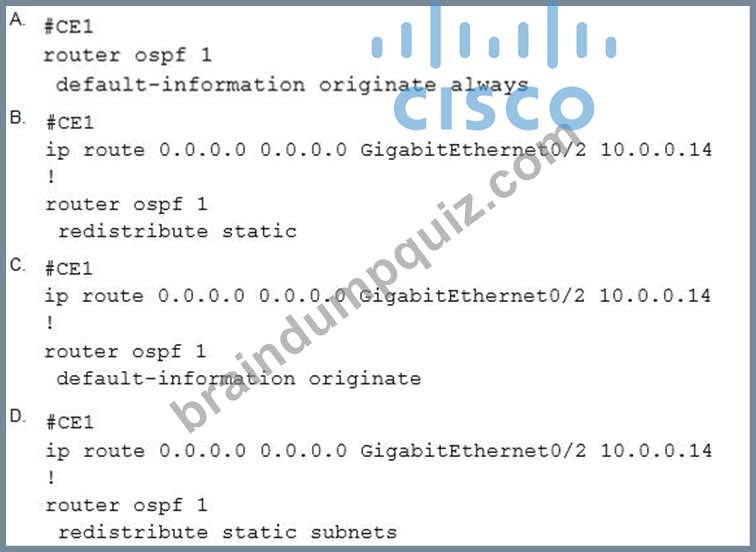
- A. Option A
- B. Option B
- C. Option C
- D. Option D
Answer: C
Explanation:
Reference:
https://www.cisco.com/c/en/us/support/docs/ip/open-shortest-path-first-ospf/47868-ospfdb9.html
NEW QUESTION 47
A network engineer is troubleshooting OSPF multiare
a. Which Cisco IOS XR feature should the engineer use in order to streamline OSPF issue?
- A. show lp ospf topology command
- B. DR support for topology management
- C. hierarchical CLI
- D. routing process enabled by default on all interfaces
Answer: A
NEW QUESTION 48
Refer to the exhibit.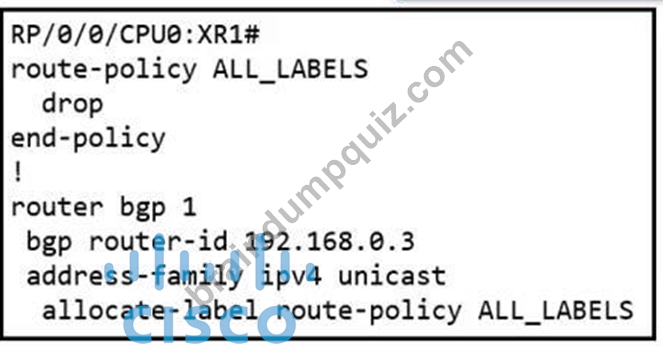
A network operator is working to deploy a Unified BGP design and allow it to be available only in selected markets and services in the future. The label allocation is not functioning as desired. Which action will fix the issue?
- A. Reconfigure the route-policy ALL_LABELS to pass.
- B. Remove the route policy and only configure "allocate-label".
- C. Remove the allocate-labels command.
- D. Reconfigure the route-policy ALL_LABELS to match all after the drop.
Answer: A
NEW QUESTION 49
Refer to the exhibit.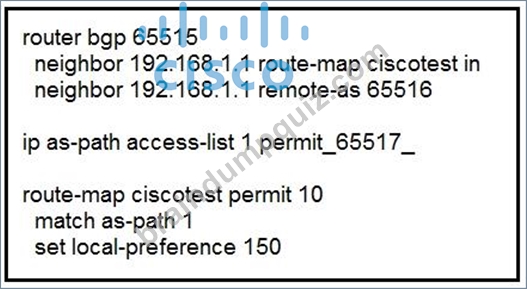
After troubleshooting BGP traffic steering issue, which action did the network operator take to achieve the correct effect of this configuration?
- A. Routes directly attached to AS 65517 have the local preference set to 150.
- B. Routes that have originated through AS 65517 have the local preference set to 150.
- C. Routes that have passed through AS 65517 have the local preference set to 150.
- D. Routes that have passed through AS 65517 have the local preference set to 150 and the traffic is denied.
Answer: C
NEW QUESTION 50
Refer to the exhibit.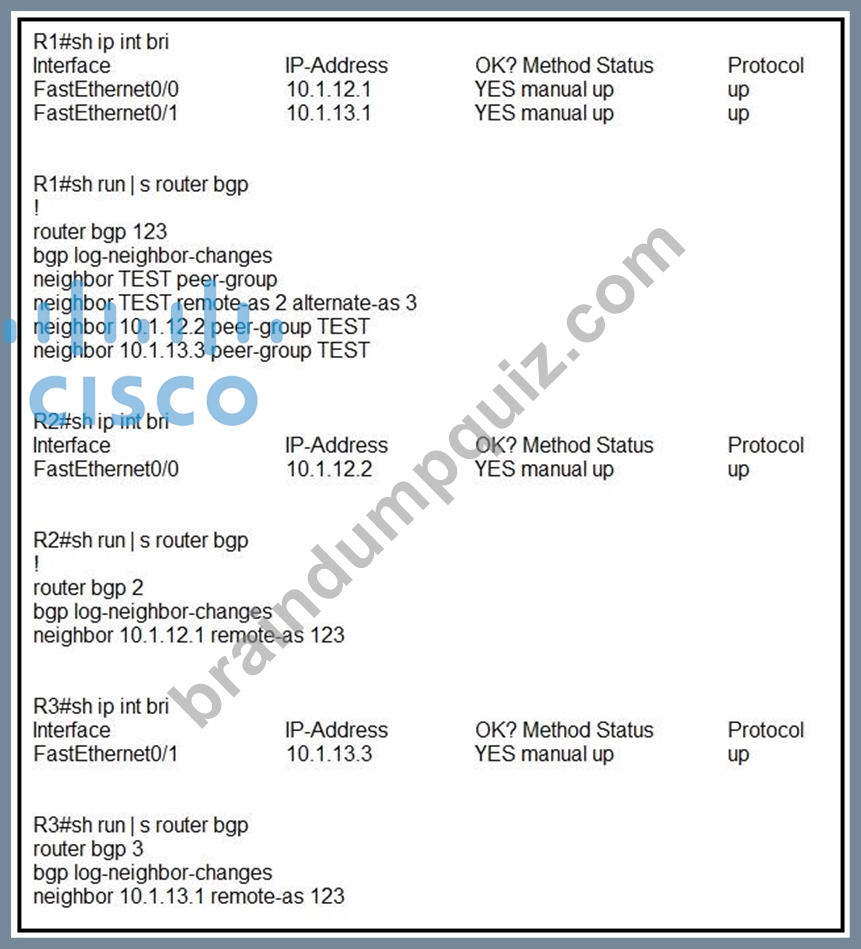
R1 is directly connected to R2 and R3. R1 is in BGP AS 123, R2 is in BGP AS 2, and R3 is in BGP AS 3. Assume that there is no connectivity issue between R1, R2 and R1, R3. Which result between BGP peers R1, R2 and R1, R3 is true?
- A. The BGP session comes up between R1 and R2, but not between R1 and R3.
- B. The BGP session comes up between R1 and R3, but not between R1 and R2.
- C. The BGP session does not come up between R1 and R2 and between R1 and R3.
- D. The BGP session comes up between R1 and R2 and between R1 and R3.
Answer: D
NEW QUESTION 51
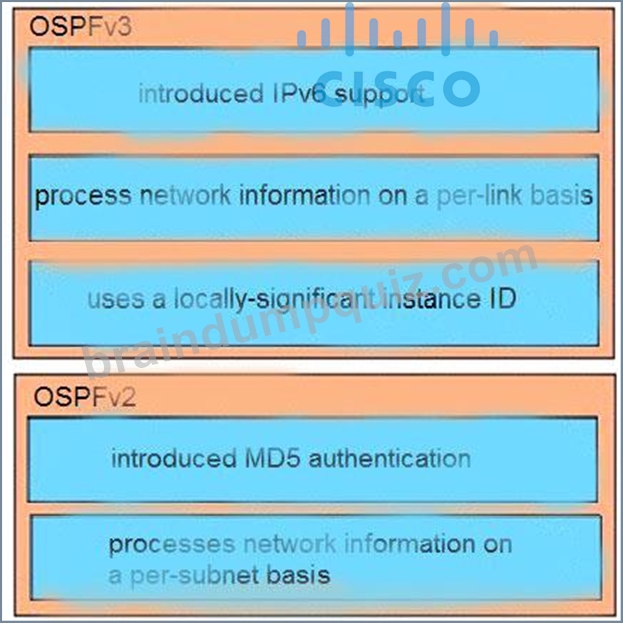
Compare different features between OSPFv2 and OSPFv3. Drag and drop the descriptions of OSPF from the left onto the correct OSPF versions on the right.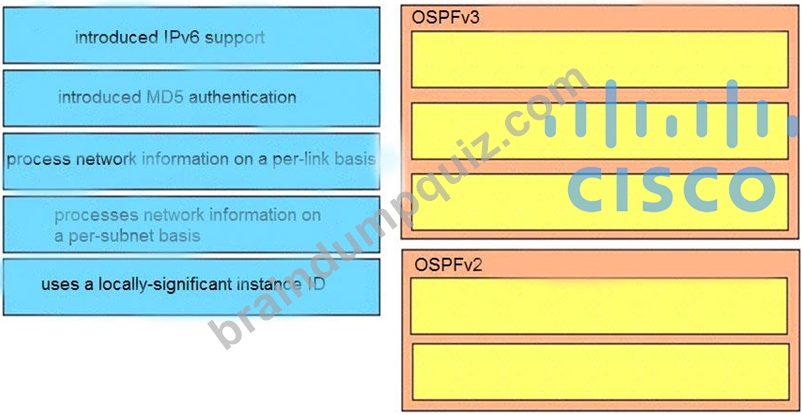
Answer:
Explanation: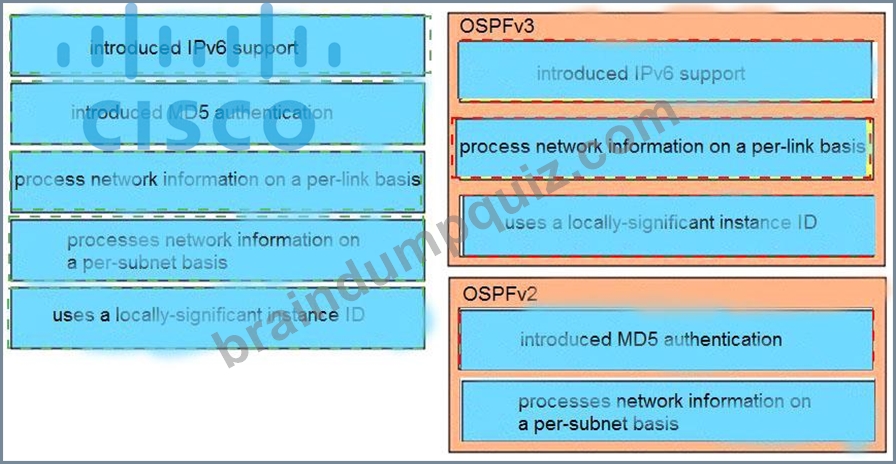
NEW QUESTION 52
Refer to the exhibit.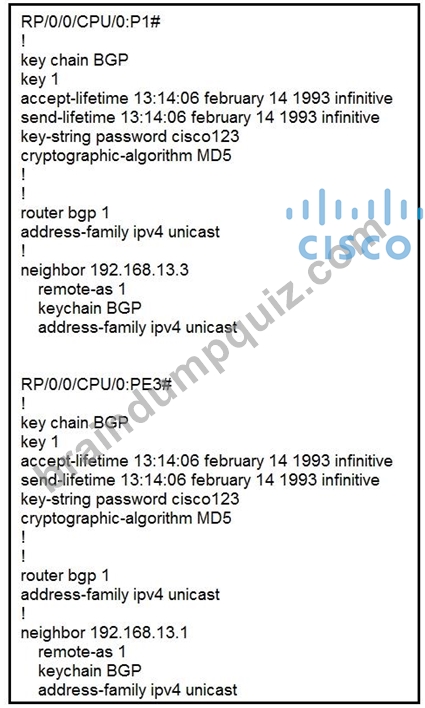
P1 and PE3 Cisco IOS XR routers are directly connected and have this configuration applied. The BGP session is not coming up. Assume that there is no IP reachability problem and both routers can open tcp port 179 to each other. Which two actions fix the issue? (Choose two.)
- A. Change MD5 to HMAC-MD5
- B. Change MD5 to HMAC-ESP
- C. Remove the send and accept lifetime under key 1
- D. Change MD5 to SHA-1
- E. Change MD5 to HMAC-SHA1-12
Answer: A,E
Explanation:
Reference:
sc40crsbook_chapter5.html
NEW QUESTION 53
Refer to the exhibit.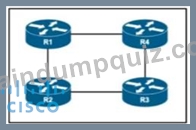
All routers on this network have been configured with P1M-SM and R1 is the rendezvous point However, when asymmetric routing is implemented to modify link usage the network begins to drop certain multicast traffic Which action corrects the problem?
- A. Place the routes affected by asymmetric routing in a VRF.
- B. Configure the routers to use PIM-DM instead of PIM-SM.
- C. Add a static Mroute for routes that are failing.
- D. Remove the asymmetric routing and use spanning tree to manage link usage.
Answer: C
NEW QUESTION 54
......
Dumps Brief Outline Of The 300-510 Exam: https://www.braindumpquiz.com/300-510-exam-material.html
Use Real 300-510 - 100% Cover Real Exam Questions: https://drive.google.com/open?id=1zX7QbAGYUWbGUm4qcUVSLU5c3f6c4Elt